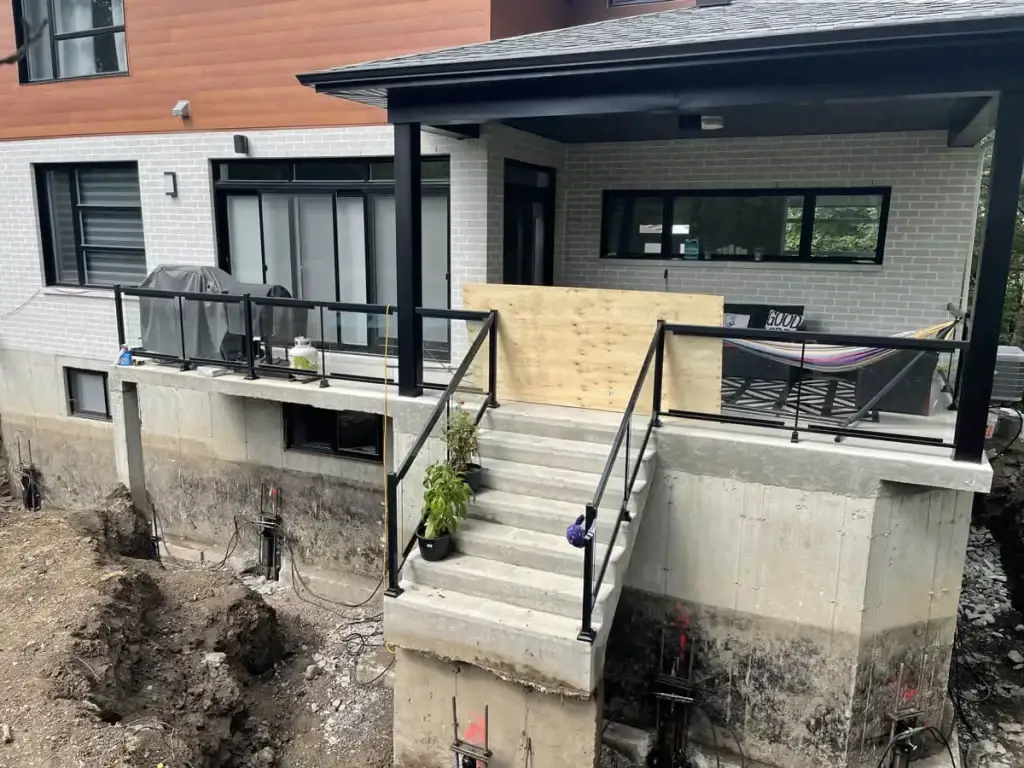

Your foundation is a bit like the foundation… of your health. As long as it’s solid, you hardly ever think about it. But when the first symptom appears, it’s best not to ignore it. A small crack in the concrete, a door that doesn’t close as well as it used to, or a slight water leak in the basement may seem harmless. Yet these signs are sometimes the first indications of a more serious foundation problem.
The good news is that taking action at the right time can often prevent much more complex and costly repairs. But you still need to know how to recognize the symptoms that warrant an inspection.
In this article, the experts at Fondabec explain how to distinguish between normal cracks and more concerning signs, what to look for in your home, and when it’s best to consult a specialist.
Foundation Cracks: How to Tell the Difference Between Superficial and Structural Cracks?
Discovering a crack in a foundation wall worries most homeowners. And that’s perfectly normal.
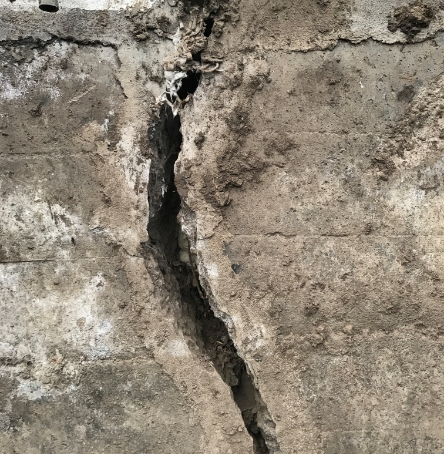
However, not all concrete cracks indicate a structural problem. Some are simply due to the natural behavior of concrete, while others reveal movement in the building’s structure that requires attention.
Shrinkage Cracks (Normal)
Concrete is a living material that continues to change after it is poured. As it dries during the first few months following construction, it loses some of its moisture and shrinks slightly. This natural phenomenon can cause fine cracks to appear, known as shrinkage cracks.
These cracks are generally:
- very fine;
- vertical;
- shallow;
- stable over time.
In most cases, they do not compromise the structural integrity of the building.
This does not mean they should be completely ignored. Even a minor crack remains a potential pathway for water. If it runs all the way through the foundation wall, it could eventually lead to water infiltration during heavy rains or snowmelt.
This is why many homeowners choose to have them inspected to confirm that this is indeed a normal occurrence.
Active or Structural Cracks
Conversely, some cracks indicate movement of the foundation or ground subsidence.
These cracks warrant special attention when they exhibit any of the following characteristics:
- they run in a stair-step pattern along masonry joints;
- they are horizontal;
- they widen over time;
- multiple cracks appear at the same time;
- they are accompanied by other signs of damage on the property.
A simple way to assess this on-site is to check the width of the cracks. If a coin fits easily into the crack or if you notice that it is widening from one season to the next, a professional inspection is strongly recommended.
Our teams regularly encounter homeowners who thought a small crack was merely a cosmetic issue. A few years later, that same crack had doubled in width and was accompanied by foundation settlement and water infiltration.
In this type of situation, taking prompt action often helps limit the scope of necessary repairs and preserve the building’s stability.
Visual Signs Inside the House
Contrary to what you might think, a foundation problem doesn’t only show up on the outside.
A house functions as a single unit. When the structure shifts—even slightly—the entire structure can be affected. The stress gradually spreads to the walls, floors, openings, and even some interior finishes.
It’s often inside that the first signs become visible.
Stuck doors and windows
Do you suddenly have to push harder to close the front door?
Does a window that opened perfectly last year now refuse to slide open properly?
Of course, moisture or temperature fluctuations can sometimes explain this phenomenon. But when several doors or windows start to stick at the same time, it’s worth asking some questions. On construction sites, homeowners often initially attribute the problem to the frames or hardware. After inspection, it’s sometimes found that a slight movement of the foundation has altered the structure’s squareness.
The change is often gradual. You get used to it without really noticing… until the day it becomes impossible to close a door or window properly. When this symptom is combined with cracks or a floor that seems to be warping, a foundation inspection becomes particularly important.
Cracked walls and floors that are no longer perfectly level
Cracks in drywall are among the most common signs observed inside a home.
They often appear:
- above door frames;
- in the corners of windows;
- at the junction between a wall and the ceiling;
- in the corners of rooms.
On its own, a cracked wall doesn’t automatically mean there’s a problem with the foundation. However, when multiple cracks appear at the same time or are developing rapidly, they may indicate structural movement.
The behavior of the floors also provides a telling clue.
Have you ever placed a ball on the floor only to see it roll slowly toward the same corner of the room?
This scenario illustrates what many homeowners discover even before they notice visible sagging. A floor that is losing its level can be a symptom of foundation movement or ground subsidence beneath the building.
Of course, not all older homes are perfectly level. Some have had slight irregularities for decades without the situation changing. What should catch your attention is, above all, the recent appearance of new symptoms or their gradual worsening.
Water Seepage in the Basement: The Ultimate Warning Sign
Of all the signs of a damaged foundation, water seepage in the basement is often what prompts homeowners to consult an expert.
A small puddle of water after heavy rain, a persistent musty odor, or the appearance of mold rarely go away on their own. On the contrary, they usually indicate that a weakness is allowing water to seep into the building.
This weakness may be due to a crack in the foundation, a defective French drain, an aging waterproofing membrane, or a combination of several factors.
The goal, therefore, is not merely to stop the water. Above all, it’s essential to understand why it’s able to penetrate the basement.
Signs to Watch For
Water infiltration doesn’t always look like dramatic water damage. In many homes, the first signs are much more subtle.
Pay particular attention to the following:
- moisture at the base of foundation walls;
- a musty or moldy odor that persists despite ventilation;
- the appearance of efflorescence—that white powder visible on concrete;
- peeling paint or warped siding;
- an increase in humidity levels in the basement.
These signs often indicate that water is seeping through the concrete or exerting significant pressure on the foundation walls.
The longer a leak persists, the greater the risks: deterioration of materials, mold growth, damage to interior finishes, and, in some cases, worsening structural problems.
Did you know?
In Quebec, problems often first appear in the weeks following the snowmelt. The ground is saturated with water, the water table rises, and spring rains significantly increase the pressure against the foundation. In fact, it is during this period that many homeowners discover their first instance of water infiltration.
Why Does the Climate of the North Shore and Terrebonne Affect Your Foundations?
While foundation problems are common in Quebec, certain regions have conditions that are particularly conducive to ground movement. Terrebonne, Mascouche, Repentigny, and several municipalities on the North Shore are largely built on clay soils that are sensitive to changes in moisture levels. Add to that freeze-thaw cycles, droughts, and heavy summer rains, and you have an environment that constantly puts stress on building foundations.
Clay has a well-known characteristic in geotechnical engineering: it swells when it absorbs water and shrinks when it dries out, much like a sponge. This phenomenon may seem minor on the scale of a handful of soil, but when it affects several hundred square meters beneath a home, the consequences become significant.
In winter, the water in the soil freezes, expands, and pushes against the ground. In spring, it thaws quickly and once again alters the conditions beneath the foundation, as we explained earlier. Summer isn’t always any better. Long periods of drought can cause significant shrinkage of clay soils, leading to the formation of voids or settlement, particularly around houses where trees absorb large amounts of water.
Over the course of the seasons, these movements create varying pressures beneath the foundation footings. As a result, some parts of the house may settle slightly, while others remain stable.
Foundation Stabilization and Repair: Expert Solutions
When a foundation problem is confirmed, many homeowners immediately fear the worst. However, not all situations require major repairs.
The choice of solution always depends on the cause of the problem, the condition of the structure, and how the issue has evolved over time. The goal is never to perform the most extensive repair possible. Rather, it is to carry out the repair that will provide long-term stability for the building.
When Repairing a Crack Is Sufficient
If the foundation is stable and the crack is primarily the result of concrete shrinkage or movement that has stopped progressing, a specialized repair may be the best solution.
Depending on the situation, various techniques can be used to:
- restore the wall’s waterproofing;
- prevent water infiltration;
- extend the foundation’s lifespan.
This approach is generally less invasive and effectively resolves problems when the structure remains sound.
When Pile Stabilization Is Necessary
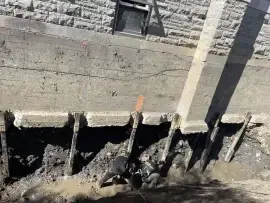
In some situations, simply repairing the crack would be like repainting a wall without fixing the water leak that is causing the damage. When the foundation continues to settle, the priority is first to stabilize the building. Stabilization using steel piles transfers the house’s loads to deeper, more stable soil.
Once the foundation is stabilized, permanent repairs can be carried out under better conditions.
Foundation Lifting
When the settlement is significant enough, it is sometimes possible to partially lift the structure. This process involves gradually raising certain sections of the house to restore it to an acceptable level while minimizing the stress placed on the building.
Every project is unique. The feasibility of foundation lifting depends largely on the age of the house, the materials used, the extent of the settlement, and the overall condition of the structure.
To learn more about this process, visit our page dedicated to foundation lifting.
A Quick Fix or a Long-Term Solution?
One question often comes up during an inspection: Should we simply repair the crack, or address the root cause of the problem?
| Repair of the crack only | Foundation Stabilization/Repair |
| Suitable when the foundation is stable | Recommended when movement of the structure is confirmed |
| Primarily fixes leaks | Fixes the root cause of the problem |
| A procedure that is generally less expensive | A larger but sustainable investment |
| This will not prevent another collapse if the cause remains | Helps prevent damage |
At Fondabec, our approach is simple: we never recommend pile driving when it isn’t necessary. Conversely, we don’t simply patch up a structural crack without first identifying and correcting its cause. It’s this transparency that allows us to offer solutions tailored to each property, rather than a one-size-fits-all answer to every problem.
Expert Tips
Take a photo of your cracks once or twice a year, always from the same angle. If they change over time, these images will help document their progression during an inspection.
Have a concern or question about a crack?
For over 20 years, Fondabec has been assisting homeowners in Greater Montreal and throughout Quebec with their foundation crack inspection and repair projects. Whether you’re in Laval, Longueuil, Terrebonne, the North Shore, the South Shore, or elsewhere in the province, our team will arrive quickly to assess your situation and propose the most durable solution.
We hold all the necessary certifications in excavation, civil engineering, and underpinning, and work with partner engineers and surveyors to ensure compliance and quality for every project.